
#4 The Explosive Case
As global hydrocarbon flows are upended by the closure of the Strait of Hormuz, the world faces an acute energy deficit. We believe the world will have to dig its way out.

Thesis:
The great energy pivot is underway. With 20% of seaborne LNG and 20% of oil supply sitting behind the Strait of Hormuz, the world is looking for solutions to the energy deficit. Most of them lead to the mining sector. The speed needed to bring more resources from the ground makes mining-services companies essential to digging our way out of the energy abyss.
Thesis assumptions:
Utilities will switch to thermal coal where feasible, pivoting away from expensive and scarce LNG
The rollout of electric transportation, renewables, and energy storage systems will accelerate.
Intensifying electrification efforts will drive structural demand for critical metals, specifically copper, nickel, and lithium.
The rerouting of oil and gas global supply chains will necessitate new infrastructure, translating into significant demand for construction materials like steel.
The Scale of the Energy Problem
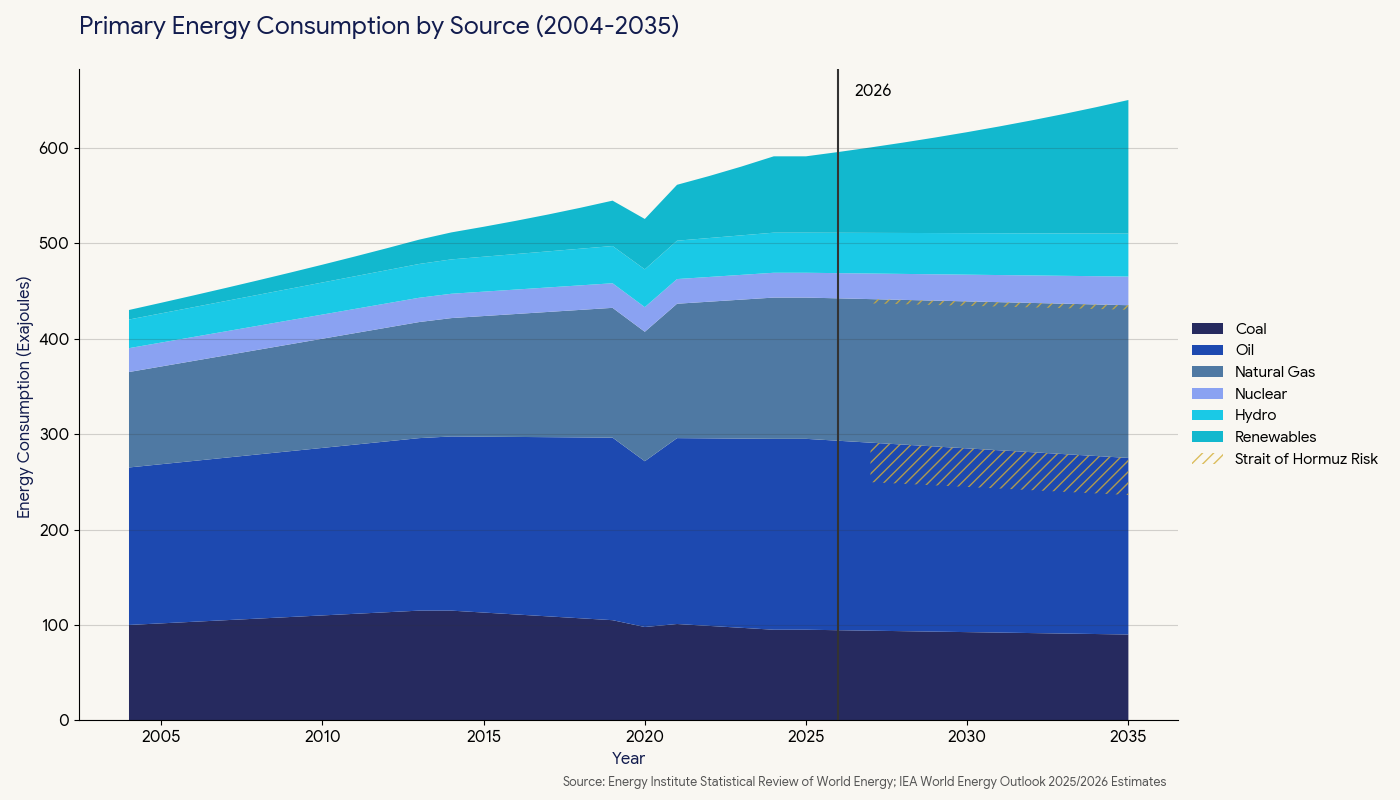
To illustrate the scale of the energy crisis triggered by a potential closure of the Strait of Hormuz, we utilized the IEA Energy Outlook and overlaid the oil and gas volumes that currently flow through this chokepoint:
Oil: Approximately 21% of global oil supply.
LNG: Approximately 20% of global LNG trade (representing ~3% of total global gas consumption).
What becomes immediately apparent is that gas is a relatively smaller issue on a global scale. LNG accounts for only 15% to 17% of total gas consumption, as the majority of the world’s gas is transported via pipelines.
Oil, however, is far more difficult problem to solve.
Digging Out of the Energy Hole
As we shall see, filling the energy gap produced by reduced flow through the Strait of Hormuz will require large quantities of mined goods. There are a few things already being done to address the lack of energy supplies from the Middle East. We will address LNG and oil separately.
LNG
Coal: The Short-Term Savior
Switching utilities from LNG to coal is the path of least resistance where idle coal-fired capacity exists. Many countries, particularly in Asia, rely heavily on LNG for power generation, and we are already seeing several of these nations begin to make the pivot.
India
“Energy security is the prerequisite for all development. We cannot allow our factories to go dark because of the volatility of imported gas markets. While we grow our renewables, coal remains our bedrock of sovereignty.” — Indian Ministry of Power, during the April 2026 Energy Security Summit
Japan
“Japan must prioritize stable electricity. By easing restrictions on coal operations, we are taking necessary steps to protect our citizens from the unpredictable disruptions in the Middle East.” — Japanese Ministry of Economy, Trade and Industry (METI), March 27, 2026
Germany
"We must supply this country with electricity. Supply security is paramount... we may even have to keep existing coal-fired power stations connected to the grid for longer, should the energy crisis continue and a shortage actually arise." — Friedrich Merz, speaking at a conference organized by the Frankfurter Allgemeine Zeitung (March 31, 2026)
The IEA characterized demand for coal as follows:
"This crisis is now two oil crises and one gas crash put all together. No country is immune, and the call on alternative fuels—most notably thermal coal—is reaching levels we have not seen since the height of the 2022 energy crisis, but with significantly less spare capacity in the mining sector to respond."
Renewable generation
Increasing renewable generation and energy storage offers another solution, albeit one with a meaningful time lag. These technologies are highly mining-intensive.

Oil
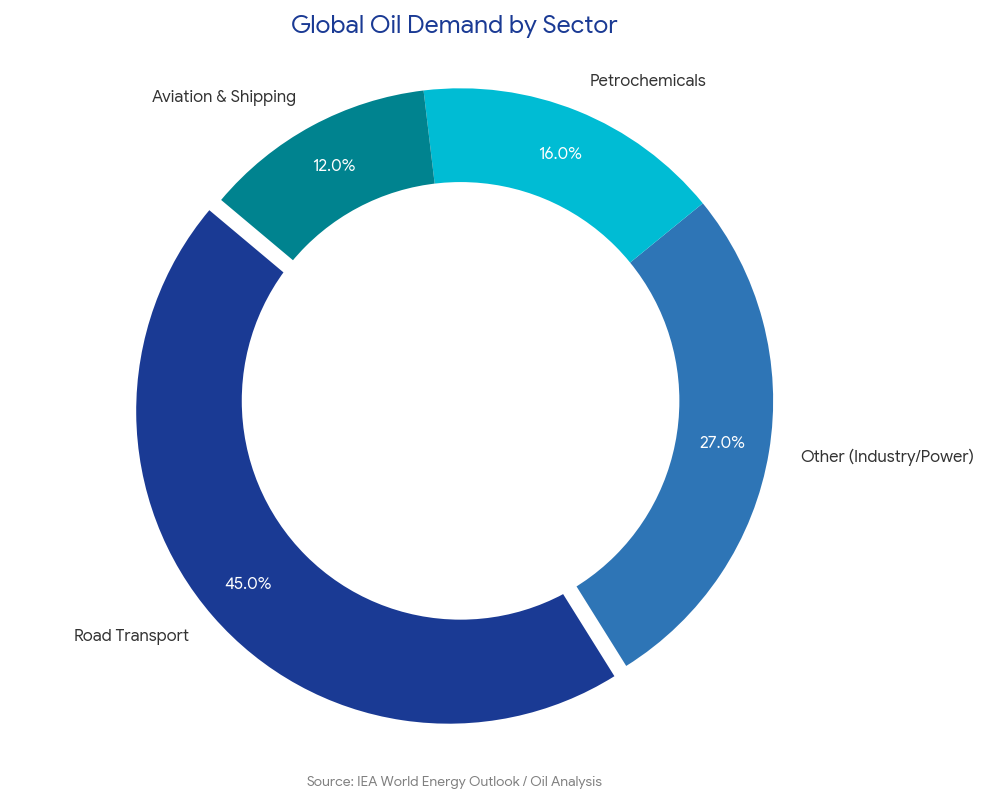
Looking at oil demand by sector, the bad news is that it’s 'sticky' and nearly impossible to swap out on short notice. If the disruption in the Strait of Hormuz persists, we aren't just looking at higher prices; we’re looking at the inevitability of demand rationing.
Rerouting (The Easiest One)
The good news is that there was idle infrastructure already in place to bypass the Strait of Hormuz. According to Bloomberg calculations, Saudi Arabia and the UAE have utilized available routes to reroute approximately 4.5 million barrels per day (mb/d), though roughly 14 mb/d still requires an alternative path.
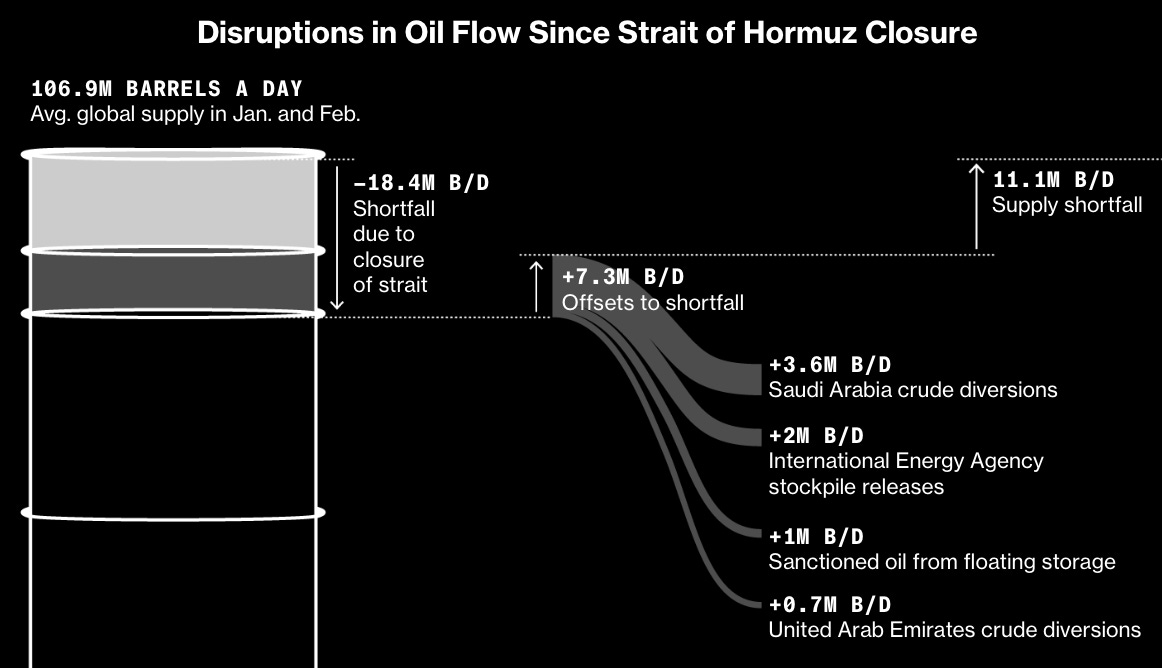
Source: Bloomberg
Increasing Production Elsewhere (The Easy One)
As we highlighted in our previous post on oilfield services, drilling outside of OPEC is booming. According to Bloomberg, non-OPEC+ producers are projected to add approximately 1.3 million barrels per day (mb/d) in new supply. This surge in activity also bodes well for the mining sector: increased oil drilling requires a massive volume of casing and tubing and more tubes translate directly into higher demand for steel and iron ore.
Electric Road Transport
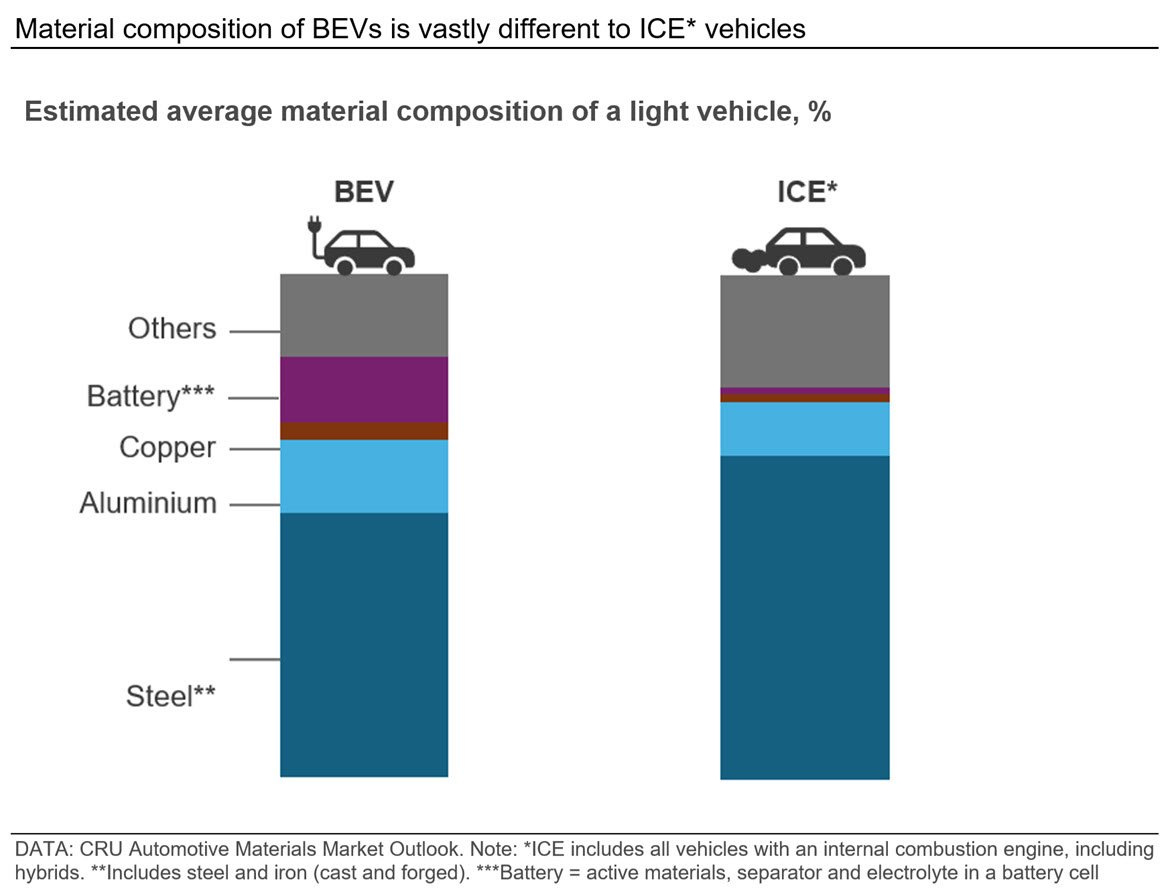
Road transport is the only sector where oil can be meaningfully displaced at scale. Consequently, going "full throttle" on the electrification of cars and trucks is the only feasible pathway to reduce global oil demand while maintaining mobility. However, the switch to electric is exceptionally metal-intensive (especially battery metals).
Alternative Routes (The Long-Term View)
According to the Financial Times, Gulf states are accelerating multi-billion dollar pipeline and rail corridor projects to bypass the vulnerable Strait of Hormuz. These strategic “insurance policies” are viewed as essential to securing global energy export routes.
The result: Another significant demand boost for construction materials, particularly steel.
Want More Energy? Mine!
As we have seen, there is no way around mining when we need more energy and hydrocarbons are strained. Due to the urgency of bringing new production online, we believe mining-services companies are perfectly positioned to benefit from this prevailing demand.
Company Highlights
Below is our exclusive section for paid subscribers, highlighting the companies we believe are most impacted by the trends discussed in the free version of this article. Each highlight includes a brief business overview, trend implications and valuation work.
